
Self Introduction for Interview: A Fresher's Guide That Works
Self introduction for interview: 4-part structure, 3 sample scripts, and common mistakes to avoid for Indian freshers.
Self Introduction for Interview: A Fresher's Guide That Works
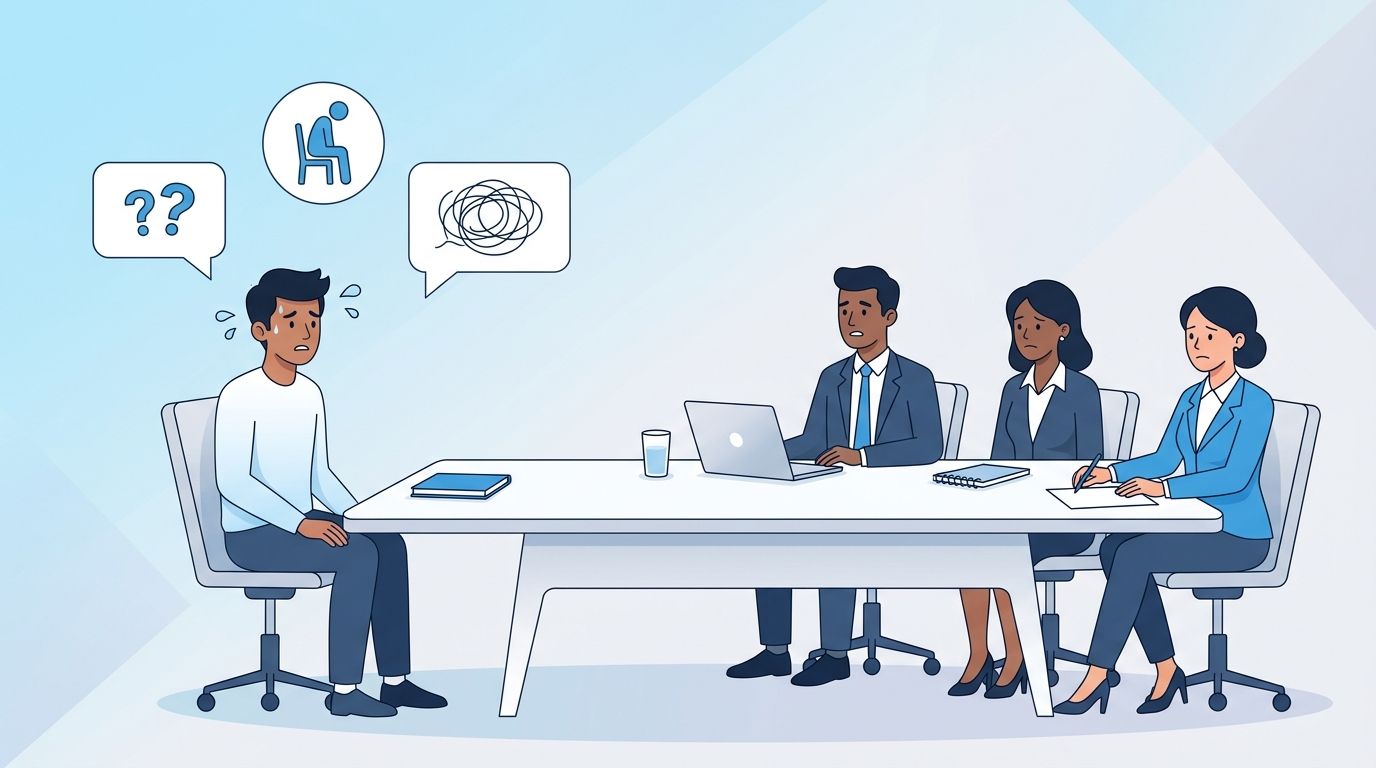
"Tell me about yourself." Four words that decide whether your interview goes well or falls apart in the first 90 seconds. According to SHRM research, most hiring professionals make initial judgments within the first five minutes — and your self-introduction is where that clock starts. If you're a fresher in India walking into campus placements, a TCS interview, or a startup video call, what you say in those first moments sets the tone for everything that follows.
Why Your Self Introduction Matters More Than You Think
A report on first-impression statistics found that 82% of hiring managers say first impressions influence job offers, and poor impressions cost candidates offers 90% of the time. In Indian campus placements, where 200 students may interview for 20 roles in a single day, recruiters use the self-introduction as a fast filter. A weak, rambling, or rehearsed-sounding intro gets you mentally crossed off before you've answered a single technical question.
The good news: a strong self-introduction follows a predictable structure. Master it, and you walk into every interview with confidence instead of anxiety.
The 4-Part Structure Every Fresher Should Use
Recruiters spend 1–2 minutes assessing your introduction, so keep it under 90 seconds. Use this framework:
- Greeting and name: "Good morning, I'm Priya Sharma." Simple, confident, direct.
- Education and background: Degree, college, year of graduation. One sentence — don't recite your marks sheet.
- Skills, projects, or internships: The part that matters most. Mention 1–2 relevant projects or internships with specific outcomes. This is where you prove you're not just a degree holder.
- Career goal and why this role: Connect your background to the job you're interviewing for. End with enthusiasm, not a life story.
Three Sample Introductions for Different Scenarios
1. Engineering Fresher (Campus Placement)
"Good morning, I'm Rohit Kumar, a 2025 Computer Science graduate from IIT Delhi. During my final year, I built a campus placement portal using Python and Django that handled 500+ student registrations. I also interned at Infosys for three months, working on a web application migration. I'm interested in backend development roles where I can apply my experience with scalable systems."
2. MBA Fresher (Corporate Interview)
"Hello, I'm Ananya Verma, a recent MBA graduate from Symbiosis with a specialization in marketing. I interned at XYZ Consulting, where I conducted market research for two client projects that were delivered ahead of schedule. I'm keen to apply my analytical skills in a brand management role."
3. Non-Engineering Fresher (General Role)
"Hi, I'm Shreya Patel, a B.Com graduate from Christ University, Bangalore. I completed a summer internship at HDFC Bank in retail banking operations and was part of my college finance club, where I organized three inter-college competitions. I'm looking for roles in financial analysis where I can build on my internship experience."
Common Mistakes That Sink Freshers
Talking too long: If your intro passes 2 minutes, the recruiter has already stopped listening. Practice with a timer. Aim for 60–90 seconds.
Reciting personal details: Your father's name, hometown, number of siblings, and hobbies are irrelevant unless the role specifically calls for them. Indian interviewers sometimes ask about family background out of courtesy — answer briefly, but don't lead with it.
Reading from notes: Maintaining eye contact (or looking at the camera in video interviews) signals confidence. Reading from a script kills that impression instantly.
Being too generic: "I'm a hardworking individual seeking growth opportunities" says nothing. Replace it with specifics: your degree, one project, one measurable outcome.
How to Practice Before the Real Thing
Reading sample introductions helps, but nothing beats speaking aloud. Record yourself on your phone, listen for filler words ("um," "like," "basically"), and time each attempt. Better yet, use PrepFox's mock interview platform to practice your self-introduction in a simulated interview environment with AI feedback on clarity, pacing, and confidence.
If you're still figuring out your career direction before interviews, career counselling can help you identify roles worth targeting — so your introduction connects to a genuine career goal, not a guess.
The Bottom Line
Your self-introduction is the first 90 seconds of a conversation, not a monologue. Structure it: name, education, one relevant project or internship, and a clear career goal. Keep it specific, keep it short, and practice until it sounds natural. For more on what comes after the intro, check our interview preparation guide — it covers the questions that follow and how to handle them with the same direct approach.
Ready to put this into practice?
Practice mock interviews, build your resume, and get expert feedback — all on PrepFox.
More from PrepFox Blog
How to Crack Aptitude Interview Questions in Placements
How to crack aptitude interview questions in Indian placements: quant, reasoning and verbal sections, an 8-week plan, and test-day strategy.
9 Questions to Ask the Interviewer That Impress HR
Interview questions to ask the interviewer: 9 smart questions that impress Indian HR, what each one signals, and what never to ask in round one.
How to Answer Civil Interview Questions as a Fresher
How to answer civil interview questions as a fresher in India: slump test, foundations, cement tests and salary data for site engineer offers.